
Introduction :
- Introduction :
- Definition :
- The Underlying Factors: Causes and Risk Factors of Arteriosclerosis :
- Symptoms :
- Diagnostic Approach :
- Treatment :
Arteriosclerosis is a widespread vascular condition. It is characterized by the hardening and thickening of the arteries. These vessels are responsible for transporting oxygen and nutrient-rich blood from the heart to the rest of the body.
This loss of elasticity reduces blood flow efficiency. The structural changes in the arterial walls can lead to severe health complications.
Understanding the multifaceted nature of arteriosclerosis is crucial for addressing its significant impact on global health.
Definition :
The arteries lose flexibility and become stiff in arteriosclerosis. This condition can arise from various underlying causes. This hardening process compromises the arteries’ fundamental role in effectively delivering oxygenated blood to the body’s organs and tissues.
The development of arteriosclerosis is typically a gradual process. It often progresses silently over many years without noticeable symptoms. These symptoms do not appear until significant health issues emerge.
Within the broad spectrum of arteriosclerosis, two primary types warrant particular attention: atherosclerosis and Mönckeberg’s medial calcific sclerosis.
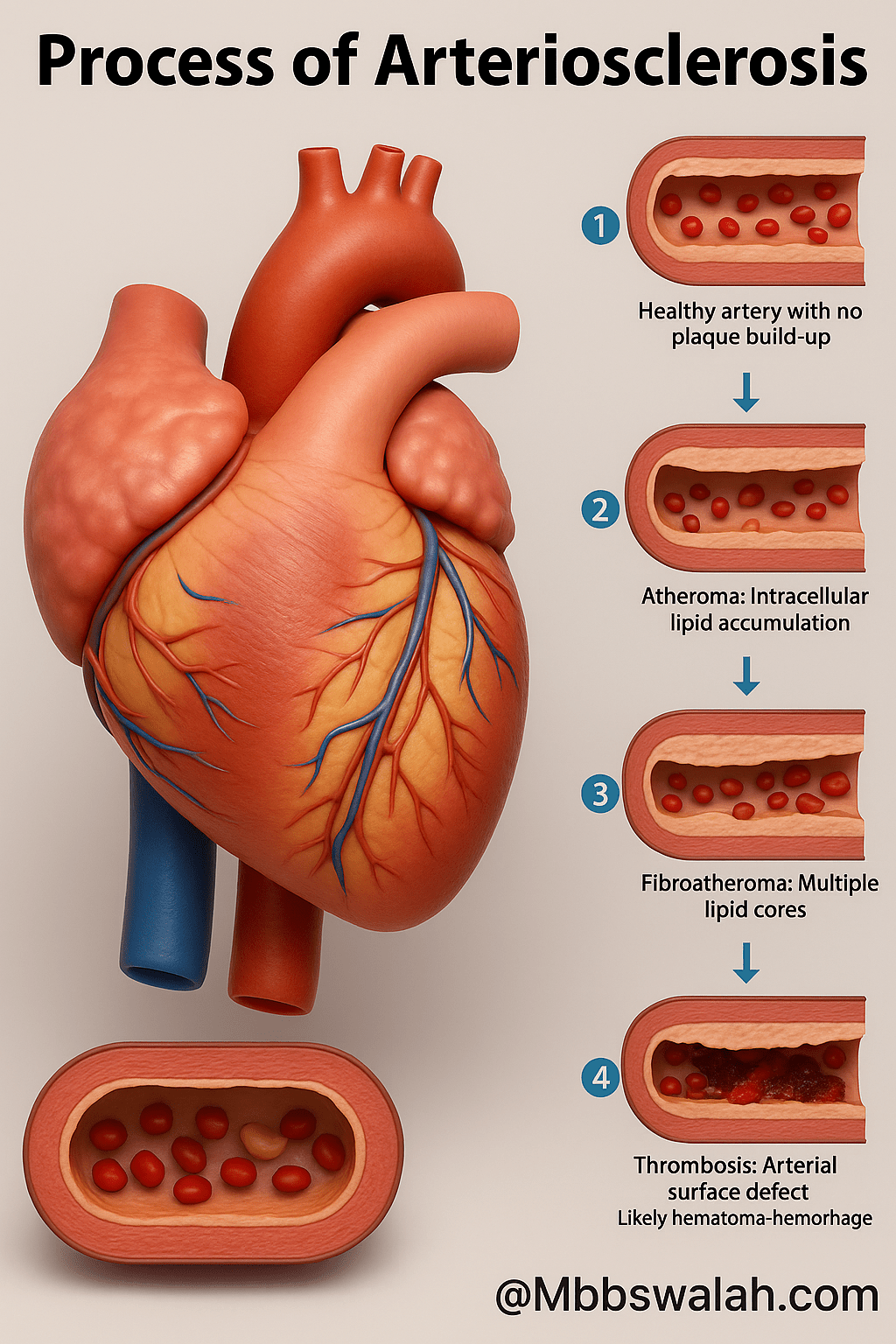
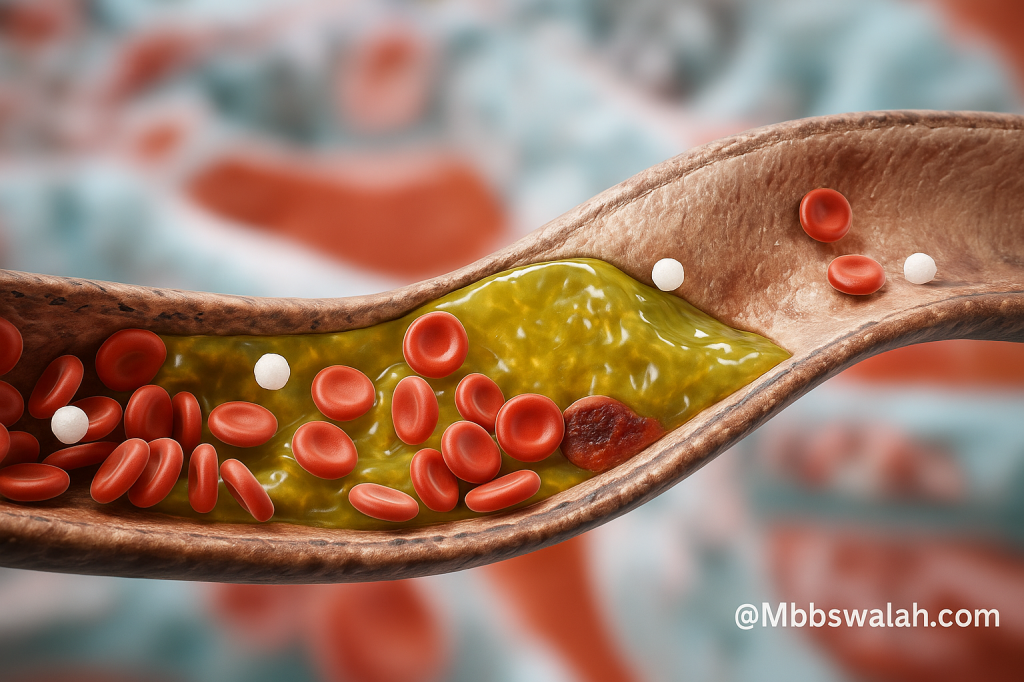
Atherosclerosis is the most prevalent form of arteriosclerosis. It is characterized by plaque accumulation within the arteries’ inner lining. This plaque is a composite of cholesterol, fats, blood cells, calcium, and other substances circulating in the bloodstream. Over time, this plaque hardens and causes the arteries to narrow, thereby impeding the flow of oxygen-rich blood.
Mönckeberg’s medial calcific sclerosis represents a distinct form of arteriosclerosis. It is characterized by the deposition of calcium in the middle layer (tunica media) of arterial walls. Mönckeberg’s sclerosis is frequently observed in association with aging, diabetes mellitus, chronic kidney disease, and
individuals undergoing hemodialysis .
The Underlying Factors: Causes and Risk Factors of Arteriosclerosis :

The development of atherosclerosis is a complex process. The precise cause remains elusive. However, it is generally understood to initiate with damage or injury to the inner lining of an artery. This lining is known as the endothelium.
This endothelial damage can be triggered by many factors. These include elevated blood pressure and high cholesterol levels. Elevated triglycerides and tobacco smoking also contribute. Other factors are diabetes mellitus, insulin resistance, obesity, and chronic inflammation.
Once the artery’s inner wall is compromised, the body begins a healing response. This healing process involves collecting blood cells and other substances at the injury site. Over time, fats, cholesterol, and other materials accumulate within the artery walls, leading to the formation of plaque.
Several risk factors can significantly elevate an individual’s likelihood of developing atherosclerosis. These risk factors can be broadly categorized into modifiable and non-modifiable.
Modifiable Risk Factors:
● High Blood Pressure (Hypertension): The persistent force of blood against the artery walls can cause damage. This makes them more susceptible to plaque formation.
● High Cholesterol: Elevated levels of low-density lipoprotein (LDL) cholesterol are often termed “bad” cholesterol. They play a direct role in plaque formation and accumulation within the artery walls.
● Smoking: The chemicals in tobacco smoke damage the blood vessels. They accelerate the process of plaque buildup. Additionally, they increase the likelihood of fatty deposits forming.
●Diabetes: This condition increases the risk of atherosclerosis by damaging the
blood vessels and promoting inflammation.
● Obesity: Excess body weight is often linked to other risk factors. These include high blood pressure, elevated cholesterol, and diabetes. It can also directly contribute to atherosclerosis through inflammatory pathways.
● Unhealthy Diet: A diet rich in saturated and trans fats can increase the risk of atherosclerosis. High cholesterol and sodium are also contributing factors. Excessive added sugars further elevate the risk.
● Lack of Physical Activity: A sedentary lifestyle leads to several risk factors. These include elevated cholesterol levels, high blood pressure, obesity, and diabetes.
● Stress: Emotional stress may contribute to arterial damage and worsen other risk factors for atherosclerosis.
● Sleep Apnea: This condition has been linked to an increased risk of developing atherosclerosis.
Non-Modifiable Risk Factors:
● Age: The risk of arteriosclerosis increases with age as arteries naturally tend to harden and narrow over time.
● Family History: A family history of early heart disease or stroke suggests a genetic predisposition to developing the condition.
● Genetics: Certain inherited gene variations can increase an individual’s susceptibility to atherosclerosis.
● Inflammatory Conditions: Chronic inflammatory diseases such as lupus, inflammatory bowel disease, or psoriasis can elevate the risk of atherosclerosis.
Symptoms :
Atherosclerosis develops without any noticeable symptoms, particularly in its early stages. Symptoms typically begin to manifest when the arteries become significantly narrowed. This blockage impedes sufficient blood flow to organs and tissues.
When atherosclerosis affects :
The coronary arteries, individuals may experience chest pain or pressure. This condition is known as angina. They may feel a racing or pounding sensation in the heart (palpitations). Additionally, they might experience shortness of breath and unexplained fatigue.
Carotid arteries, which supply blood to the brain, can cause sudden weakness or numbness in the arms or legs. They may also lead to difficulty speaking or slurred speech. A sudden or temporary loss of vision in one eye and drooping of the face muscles are also possible. Episodes of dizziness might occur as well. These can be symptoms of a transient ischemic attack (TIA) or a stroke.
Peripheral arteries in the arms and legs are affected. Individuals may experience leg pain during walking (claudication). They might also experience muscle pain or cramping in the legs or arms. There can be a sensation of coldness in the lower leg or foot. Numbness or weakness in the affected limb may occur. Sores on the toes or feet may be slow to heal. Shiny skin may appear on the legs. There might be changes in skin color. Slow growth of toenails can occur. Hair loss on the legs is also possible.
Renal arteries, which supply blood to the kidneys, can lead to various health issues. They may cause high blood pressure and kidney failure. Changes in the frequency of urination, swelling in the body, and persistent fatigue may also occur.
Diagnostic Approach :
A physical examination is often the first step. It helps to detect any abnormal whooshing sounds known as bruits. The examination also checks the patient’s pulses and compares blood pressure measurements in the arms and legs. Blood tests are crucial for assessing cholesterol and triglyceride levels. They evaluate blood sugar levels. They also check markers of inflammation, such as C-reactive protein (CRP).
Imaging tests play a vital role in diagnosing and evaluating the extent of arteriosclerosis.
- Doppler ultrasound is used to assess the speed and direction of blood flow, which can help identify narrowed arteries.
- Ankle-Brachial Index(ABI) compares blood pressure measurements in the ankles and arms to screen for peripheral artery disease.
- Electrocardiogram (ECG/EKG) measures the electrical activity of the heart and can indicate reduced blood flow or a previous heart attack.
- Echocardiogram uses sound waves to create images of the heart, providing information about its structure and function.
- Exercise stress tests monitor the heart’s performance during physical activity and can reveal underlying issues with blood flow.
- Computed Tomography (CT) scans, including coronary calcium scans, can detect calcium deposits in the arteries. CT angiography provides detailed images of blood vessels.
- Magnetic Resonance Angiography (MRA) offers detailed visualization of large arteries to identify hardening and narrowing .
- Cardiac catheterization and angiogram is an invasive procedure. A catheter is inserted into a blood vessel and guided to the heart. This allows for the injection of dye. X-rays are used to visualize the coronary arteries and detect any blockages.
Treatment :
The management of arteriosclerosis is a comprehensive endeavor. It prioritizes lifestyle modifications to mitigate risk factors. It also involves medical interventions aimed at enhancing blood flow and preventing potential complications.
Lifestyle Changes:
- Heart-healthy diet that emphasizes the consumption of fruits, vegetables, whole grains, and lean protein sources. It also includes low-fat dairy products. This diet limits the intake of saturated and trans fats, cholesterol, sodium, and added sugars.
- Regular exercise, aiming for at least 30 minutes of moderate-intensity activity on most days, is also strongly recommended.
- Smoking cessation is paramount in slowing or halting the progression of the disease.
- Healthy weight is also essential, as is managing stress levels.
Statins are a primary class of drugs used to lower LDL cholesterol levels. They reduce plaque buildup and may even reverse some fatty deposits in the arteries.Aspirin is often recommended to help thin the blood and prevent the formation of blood clots.Beta-blockers are used to slow down the heart rate and lower blood pressure.
Medical procedures :
Angioplasty and stent placement involve inserting a thin tube (catheter) into the blocked artery. A small balloon is inflated to widen the artery. A stent, which is a small mesh tube, is often placed to help keep it open.
Coronary artery bypass graft (CABG) surgery is an open-heart procedure. It involves taking a healthy blood vessel from another part of the body. The vessel is used to create a new route for blood to flow around the blocked coronary artery.
For carotid artery disease, endarterectomy may be performed. This is a surgical procedure to remove plaque from the inside of the carotid arteries in the neck.
In cases of peripheral artery disease, bypass surgery can create a new pathway for blood. It allows blood to flow around a blocked artery in the leg.


 MBBSWALAH
Leave a reply to Anonymous22 Cancel reply