
Table of contents.
Introduction:
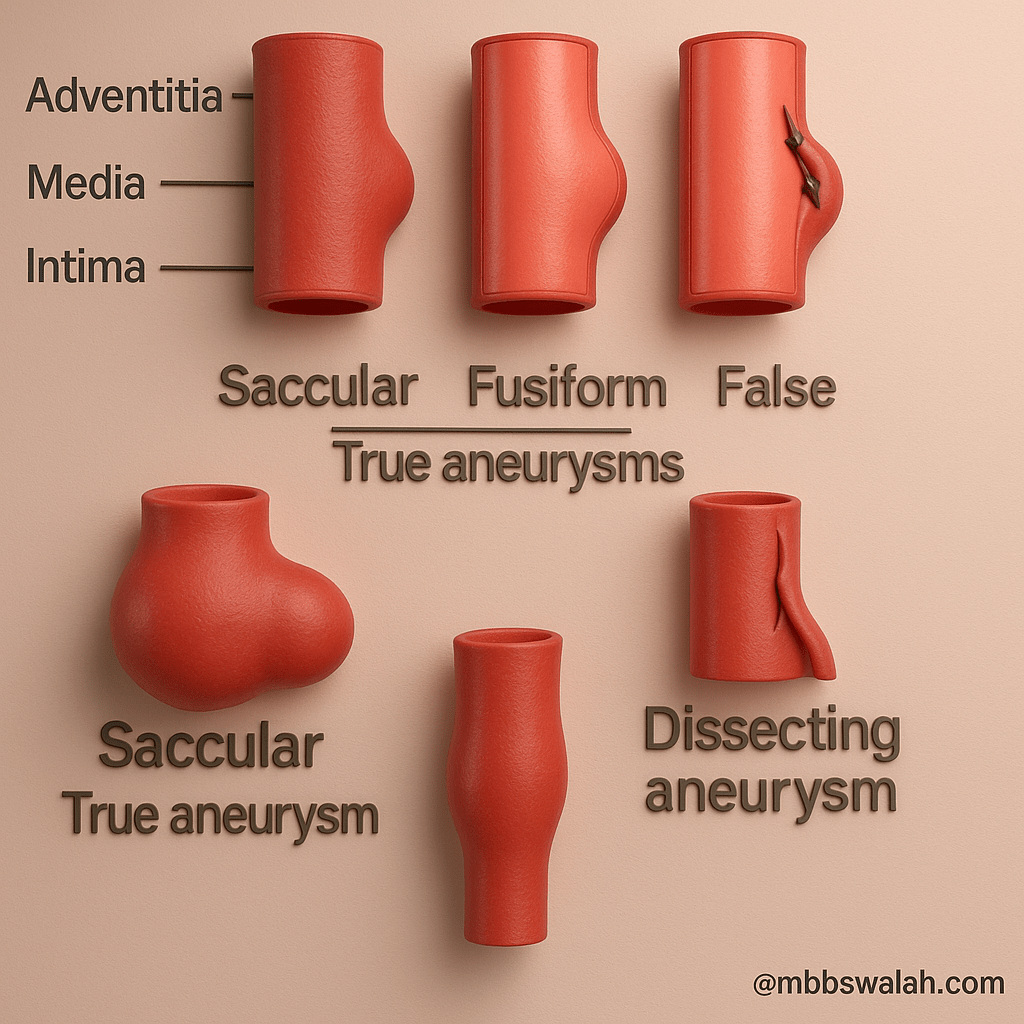
Cardiovascular aneurysms are a significant medical concern. They are marked by the abnormal bulging or ballooning of a blood vessel. This condition occurs due to a weakened arterial wall. This bulge is often compared to an over-inflated balloon, where the vessel wall stretches and becomes increasingly fragile under pressure.
Aneurysms can occur in any artery of the body. They are most commonly found in the aorta (the largest artery), the brain, and various peripheral arteries. Their presence and potential for severe complications make them a critical topic in cardiovascular health.
While many aneurysms develop slowly and remain asymptomatic for years, their silent progression can be dangerous. If undetected, some aneurysms can enlarge rapidly or rupture without warning. A ruptured aneurysm can be life-threatening. It can cause massive internal bleeding. Other complications include stroke, shock, or sudden death, depending on its location.
Causes and risk factors:
Factors Contributing to Aneurysm Development:
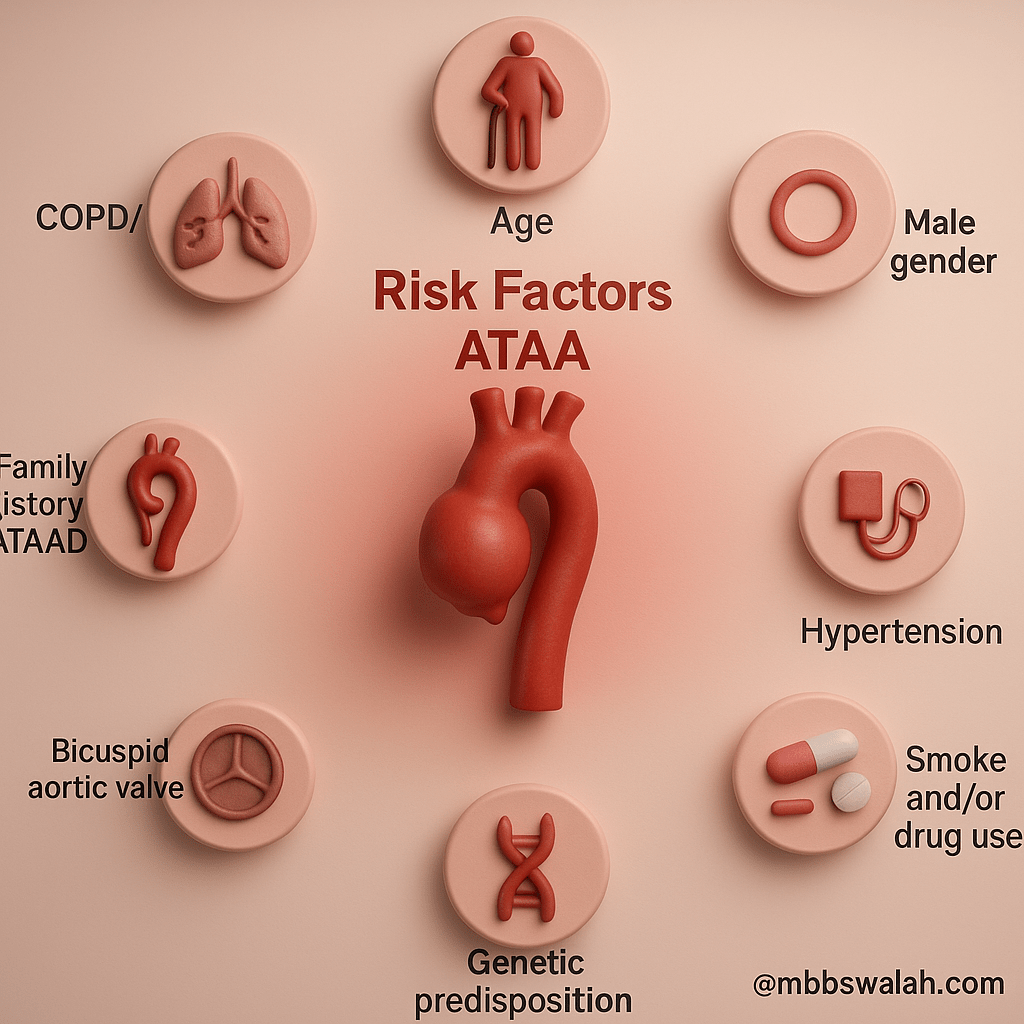
- High Blood Pressure (Hypertension):Chronic high blood pressure can strain blood vessel walls, leading to weakening and potential aneurysm formation.
- Smoking:Smoking weakens blood vessel walls and contributes to plaque buildup, increasing the risk of aneurysms.
- Genetic Predisposition: Conditions like Marfan syndrome, Ehlers-Danlos syndrome, and polycystic kidney disease can predispose individuals. These conditions lead to weakened blood vessels and increased aneurysm risk.
- Trauma:Head injuries, particularly severe ones, can damage blood vessels and increase the risk of aneurysms.
- Infections:Infections in or near blood vessels can weaken their walls, making them susceptible to aneurysm formation.
- Atherosclerosis:The buildup of plaque in arteries (atherosclerosis) can lead to weakened areas and potentially aneurysms.
- Alcohol Abuse:Excessive alcohol consumption can weaken blood vessels and increase the risk of aneurysm rupture.
- Age:The risk of aneurysms generally increases with age, as blood vessel walls can weaken over time.
- Previous Aneurysm:Having one aneurysm increases the risk of developing another.
- Family History:A family history of aneurysms can increase the likelihood of developing them.
Classification :
1. Based on location:
A. Aortic Aneurysms
- Abdominal Aortic Aneurysm (AAA) – in the abdominal portion of the aorta.
- Thoracic Aortic Aneurysm (TAA) – in the chest portion of the aorta.
- Ascending aortic aneurysm.
- Aortic arch aneurysm.
- Descending thoracic aortic aneurysm.
B.Cerebral (Intracranial) Aneurysms
- Typically berry aneurysms (saccular shape), occurring in the brain’s arteries
C .Peripheral Aneurysms
- Leg arteries: Popliteal, Femoral.
- Neck arteries: Carotid .
- Visceral arteries: Splenic, Mesenteric, Renal, Hepatic .
2. Based on shape :
- Saccular (Berry) – most commonly described for cerebral aneurysms.
- Fusiform – more common in aortic aneurysms (not explicitly mentioned in the text but relevant).
Aortic Aneurysms :
Abdominal Aortic Aneurysm :
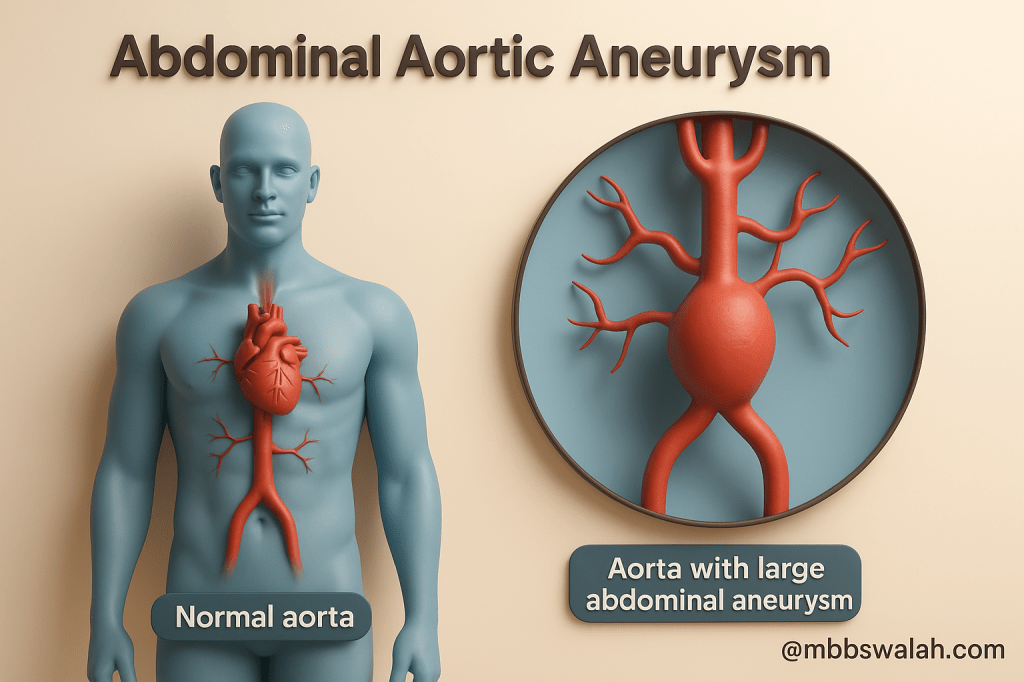
- Location : Abdominal aortic aneurysms (AAAs) occur in the section of the aorta that passes through the abdomen
- Symptoms: Often asymptomatic. When present, symptoms may include Throbbing or deep pain in the back or sidePain in the buttocks, groin, or legs.
- Primary risk: Rupture, which can lead to sudden, severe pain and life-threatening internal bleeding.
Diagnosis :
- Abdominal ultrasound: Common screening method, especially in high-risk individuals (e.g., men aged 65–75 who have ever smoked).
- CT scan or MRI: Used for detailed imaging of the aneurysm’s size and location.
Treatment :
- Monitoring: For small, asymptomatic AAAs with regular ultrasounds.
- Surgical Repair: Recommended for: Aneurysms > 5.0 to 5.5 cm Rapidly growing aneurysm Symptomatic cases.
Types of repair:
- Endovascular repair: Minimally invasive; involves placing a stent graft via a small groin incision.
- Open surgery: Involves a larger incision to directly repair or replace the affected section with a graft.
Thoracic Aortic Aneurysm (TAA)

- Location : Occur in the part of the aorta located in the chest (thoracic aorta).
- Symptoms : Often asymptomatic and slow-growing.
- When present, symptoms may include:
- Back pain
- Chest pain
- Cough
- Hoarseness
- Shortness of breath
- Complications : Rupture or dissection can cause: Sudden, severe chest or back pain Difficulty breathing. Life-threatening internal bleeding.
Diagnosis:
- Chest X -Ray
- CT scan
- Echocardiogram
- MRI
Treatment :
- Monitoring : For small, asymptomatic TAAs with regular imaging.
- Surgical Repair: Recommended for: TAAs > 5.0 to 6.0 cm Rapidly growing aneurysms Symptomatic cases.
Types of repair :
- Open-chest surgery: Repair or replace the affected aortic segment.
- Thoracic Endovascular Aortic Repair (TEVAR):Minimally invasive, similar to AAA stent graft placement.
Cerebral Aneurysms :
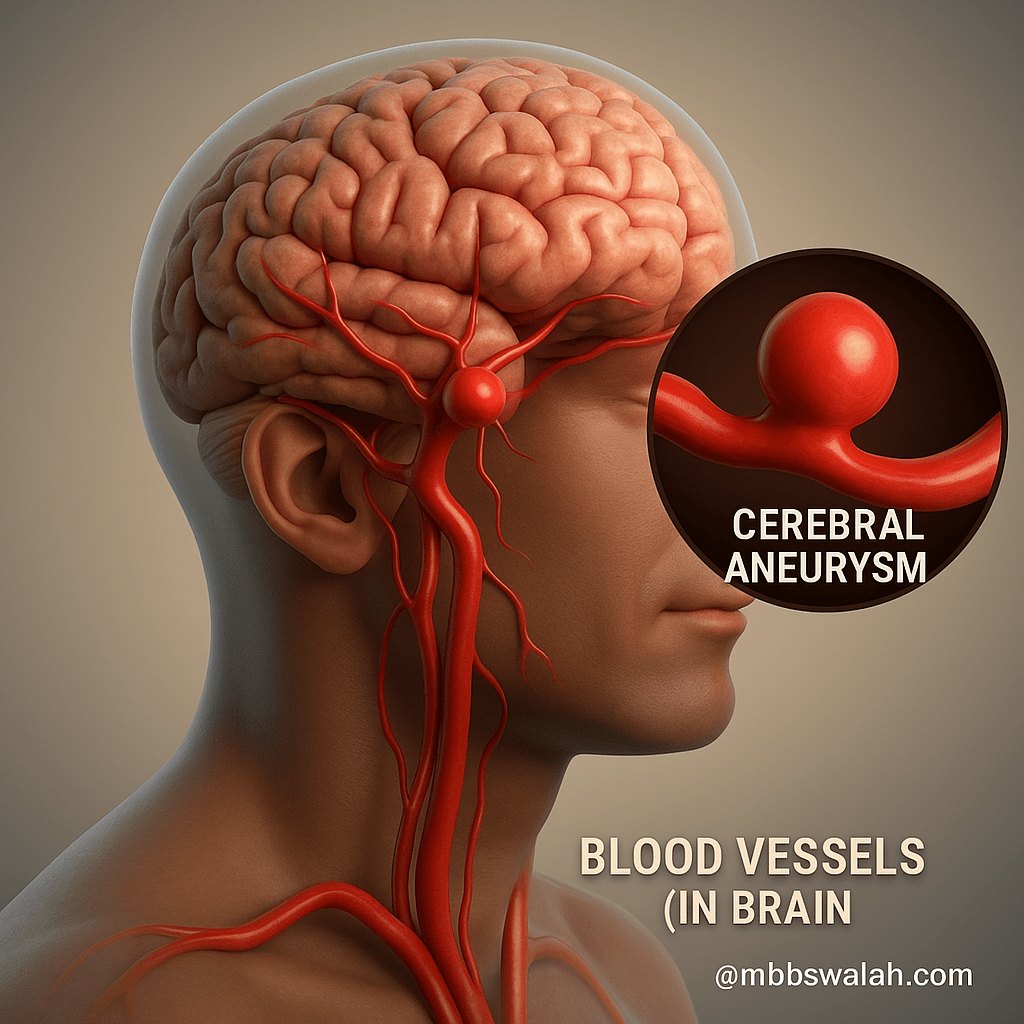
Definition : Bulges or ballooning in the walls of blood vessels in the brain.
Symptoms :
Unruptured aneurysm:
- May cause symptoms if pressing on nerves or brain tissue:
- Pain above/behind one eye
- Vision changes
- Dilated pupil
Ruptured aneurysm :
- Can cause subarachnoid hemorrhage (SAH)
- Symptoms include:
- Sudden, severe headache (“worst headache of life”)
- Nausea and vomiting
- Stiff neck
- Blurred or double vision
- Loss of consciousness
Diagnosis : Imaging tests such as:
- CT scan
- CT angiography (CTA)
- MRI
- Cerebral angiography.
Treatment :
- Surgical Clipping: Metal clip placed at base of aneurysm to stop blood flow.
- Endovascular Coiling: Platinum coils inserted into aneurysm to block blood flow and prevent rupture.
- Flow Diversion: Stent placed in artery to divert blood flow away from larger aneurysms.
Peripheral Aneurysms :
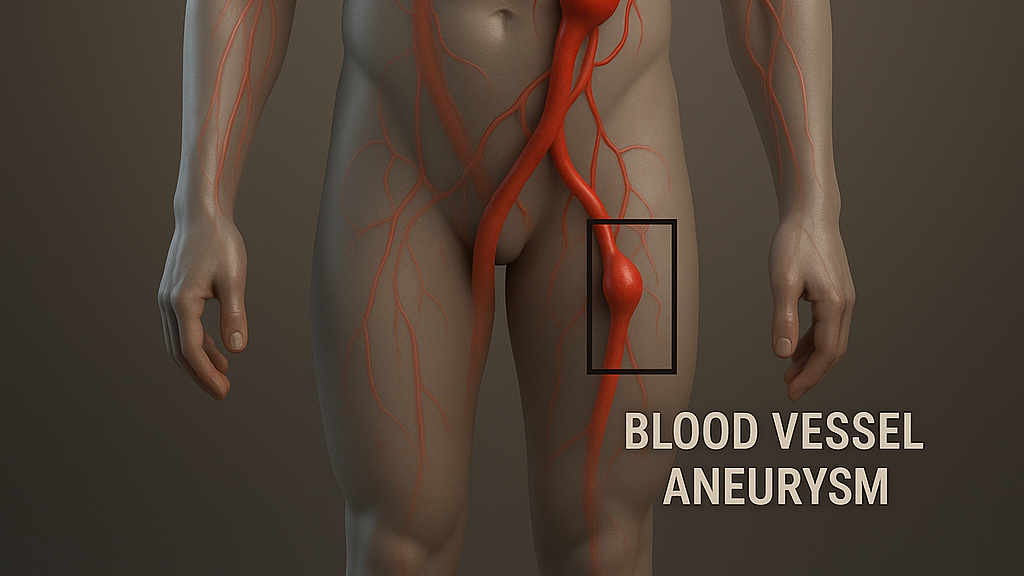
Definition : Aneurysms that occur in arteries outside the aorta and brain.
Common Location :
- Popliteal artery (behind the knee) – most common
- Femoral artery (groin)
- Carotid artery (neck)
- Visceral arteries (spleen, intestines, kidneys, liver)
Symptoms :
- Often asymptomatic
- When present, symptoms may include: Pain, numbness, or swelling in the affected limb.
Complications :
- Blood clot formation (thrombosis), which may:
- Block blood flow
- Travel (embolize) to other parts of the body
- Rupture is less common but can occur
Diagnosis :
- Physical exam
- Ultrasound
- CT angiography
- MRI
Treatment :
- Monitoring for small, asymptomatic aneurysms
- Open surgical repair: Removal or bypass of aneurysm using a graft
- Endovascular repair: Placement of a stent graft inside the aneurysm.
Summary:
Cardiovascular aneurysms are serious conditions where blood vessels bulge due to weakened walls. They can develop silently. They may suddenly enlarge or even rupture. Such events lead to severe health risks like internal bleeding or strokes. Several factors increase their chances, such as high blood pressure, smoking, and genetics. Aneurysms can occur in different body arteries, most commonly in the aorta, brain, and peripheral areas. They are classified by location and shape. Specific types like abdominal and thoracic aortic aneurysms show distinct symptoms. They require various diagnostic tests, including CT scans and MRIs. Treatments range from careful monitoring to surgical options, depending on the aneurysm’s type and location. Being informed about the causes, symptoms, and management of aneurysms is essential for preventing serious complications.

 MBBSWALAH
Leave a comment